
Compatibility Study of Stainless Steel Seamless Pipe and Carbon Steel Seamless Pipe in Chemical Equipment
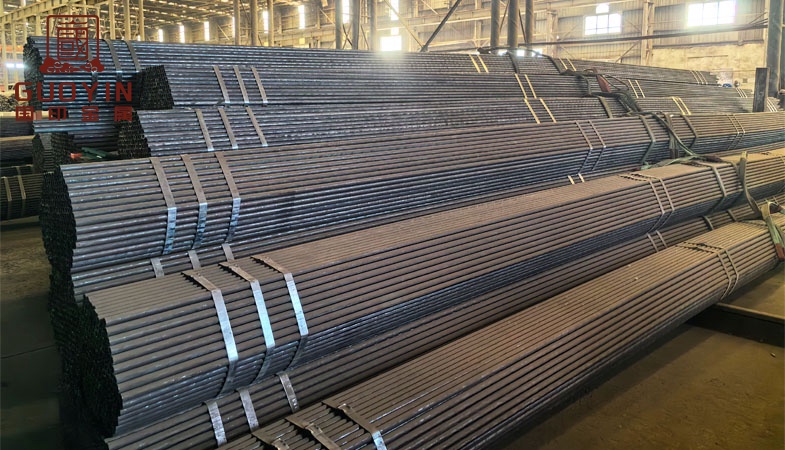
In chemical equipment design, selecting the appropriate piping material is a critical decision that directly impacts operational safety, equipment longevity, and overall cost efficiency . Stainless steel seamless pipe and carbon steel seamless pipe represent the two most widely used options for chemical equipment applications, each offering distinct advantages depending on the specific operating conditions. This article provides a comprehensive comparison of these materials to guide proper selection.
Stainless steel seamless pipe is renowned for its exceptional corrosion resistance, achieved through alloying elements like chromium (minimum 16%) and molybdenum, which form a protective passive layer on the surface . This makes it the preferred choice for transporting highly corrosive media such as sulfuric acid, hydrochloric acid, and caustic soda in chemical processing environments . Common grades include 304, 316L, and duplex stainless steel like 2205, with 316L offering enhanced resistance to chloride pitting corrosion . Beyond corrosion resistance, stainless steel maintains excellent mechanical properties at both high and cryogenic temperatures, making it suitable for heat exchangers, furnace tubes, and LNG systems . Its smooth, non-porous surface also meets stringent hygiene requirements for pharmaceutical and food-grade applications .
In carbon steel seamless pipe vs stainless steel evaluations, carbon steel offers distinct economic and mechanical advantages. Carbon steel seamless pipes (common grades 20#, A106 Gr.B, and API 5L) provide higher tensile strength and excellent load-bearing capacity at significantly lower initial costs—typically 3-5 times less expensive than stainless alternatives . This makes carbon steel ideal for non-corrosive media transportation, structural supports, pipe galleries, and high-pressure applications like oil and gas pipelines . Carbon steel also exhibits superior weldability and mature processing techniques . However, its primary limitation is poor corrosion resistance in humid or chemically aggressive environments, necessitating protective coatings, galvanizing, or plastic linings (such as PTFE or PP) when used with corrosive media .
The compatibility analysis of these materials reveals they are not simply substitutes but complementary solutions. Stainless steel excels in highly corrosive environments, high-temperature service, and applications demanding product purity, where its lower lifecycle maintenance costs justify higher upfront investment . Carbon steel, particularly plastic-lined variants, provides an optimal balance of mechanical strength and cost-effectiveness for budget-conscious projects involving non-extremely corrosive media . Selection should be based on systematic evaluation of media composition, temperature, pressure, expected service life, and total lifecycle cost analysis, always consulting relevant standards such as ASME or GB/T 9948-2025 .
In conclusion, understanding the performance characteristics of both stainless steel seamless pipe and carbon steel options enables engineers to make informed decisions that ensure safe, reliable, and economical operation of chemical equipment throughout its design life.
Related Posts
- ▶ 304 Stainless Steel Pipe: Corrosion Resistance and Certification Standards in Food Industry
- ▶ Stainless Steel Coil 8K Mirror Polishing: Equipment Parameters and Common Issues Solutions
- ▶ Properties and Applications of Steel
- ▶ Production method of steel
- ▶ The policy impact on China's steel industry
- ▶ Global Sales Network
Send Us A Message

