
Cold-Rolled vs. Hot-Rolled Plates: 7 Key Differences for Precision Material Selection
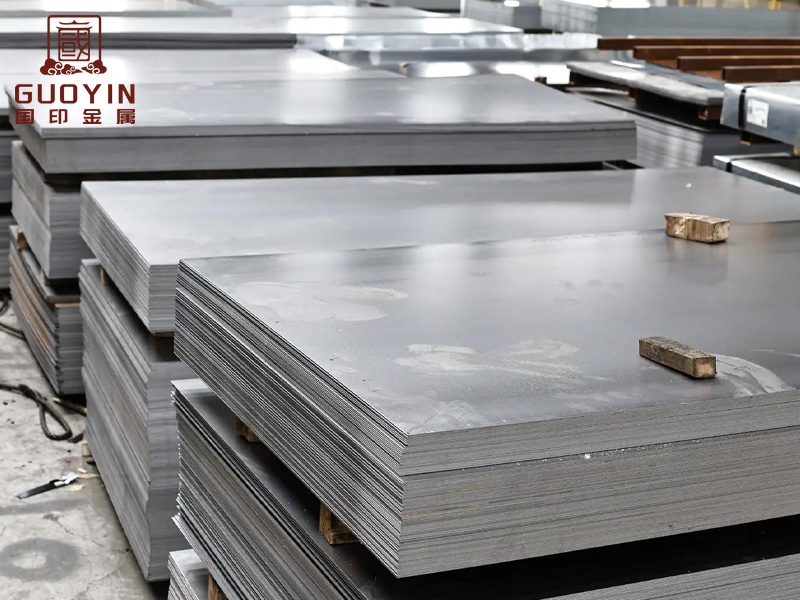
When selecting steel plates for industrial applications, understanding the differences between cold-rolled and hot-rolled plates is crucial. These two processing methods result in distinct material properties, surface finishes, and performance characteristics. This article explores the seven primary differences to help engineers and designers make informed choices based on project requirements.
1. Processing Temperature and Method
Hot-Rolled Plates: Produced at high temperatures (typically above 850°C), where steel is heated to its recrystallization point and then rolled. This process allows for easier shaping but results in a rougher surface with scale.
Cold-Rolled Plates: Manufactured at room temperature using hot-rolled plates as a base. The additional cold-rolling step enhances strength and surface finish but reduces ductility.
2. Surface Quality and Tolerances
Hot-Rolled Plates: Surface has oxidation scale and a matte finish, requiring secondary processing for a smooth appearance. Dimensional tolerances are looser due to natural cooling.
Cold-Rolled Plates: Smooth, shiny surface with precise dimensional control, ideal for applications demanding tight tolerances.
3. Mechanical Properties
Hot-Rolled Plates: Higher ductility and toughness but lower strength and hardness. Suitable for structural applications where flexibility is needed.
Cold-Rolled Plates: Increased strength and hardness due to work hardening, but reduced elongation. Ideal for precision components requiring durability.
4. Cost and Production Efficiency
Hot-Rolled Plates: More cost-effective for large-scale projects due to simpler processing and faster production.
Cold-Rolled Plates: Higher cost due to additional rolling and annealing steps, but offers better long-term performance for high-precision applications.
5. Residual Stresses and Deformation
Hot-Rolled Plates: Minimal residual stresses but may experience warping or size distortion during cooling.
Cold-Rolled Plates: Higher residual stresses due to cold-working, which can lead to bending or twisting if not properly annealed.
6. Application Scope
Hot-Rolled Plates: Ideal for construction, agricultural equipment, and transportation infrastructure where cost and malleability are prioritized.
Cold-Rolled Plates: Used in automotive panels, appliances, and aerospace components where surface finish and strength are critical.
7. Corrosion Resistance and Longevity
Hot-Rolled Plates: More susceptible to corrosion due to surface scale and porosity.
Cold-Rolled Plates: Better corrosion resistance with a smoother surface that resists rust formation.
Conclusion
Selecting between cold-rolled and hot-rolled plates depends on project-specific needs. For structural applications requiring cost efficiency and flexibility, hot-rolled plates are suitable. For precision components demanding high strength, smooth surfaces, and durability, cold-rolled plates are the preferred choice. Understanding these differences ensures optimal material selection for enhanced performance and longevity.
Related Posts
- ▶ 304 Stainless Steel Pipe: Corrosion Resistance and Certification Standards in Food Industry
- ▶ Stainless Steel Coil 8K Mirror Polishing: Equipment Parameters and Common Issues Solutions
- ▶ Properties and Applications of Steel
- ▶ Production method of steel
- ▶ The policy impact on China's steel industry
- ▶ Global Sales Network
Send Us A Message

